Alternative Country: How Music Stays Underground
Introduction
Alternative country (alt-country) is a term I hadn't heard of before my MUS450 seminar with Dr. Peterson. These past few years I have grown an interest in country music, but I don't gravitate towards the top charts. Alt-country embodies ideals I hold myself - combining musical influences to create a unique musical sound and identity, resistance to typical conservative views held in popular country spaces, and the desire to work independently or with independent labels, which tend to have the musicians' interests held at the forefront. This research has also helped me understand the power that genres hold in today's popular music landscape, and how audiences, musicians, and the industry all interact.
Outline
Throughout this website, I will look at the origins of alt-country and alt-rock, as well as the origins and evolution of the terms. Then, I will look at both audiences’ interactions with these terms. I will argue that hyper-categorization of music into genres and subgenres, while not inherently harmful, contributes to the commercialization and standardization of music in the mainstream market. Finally, I will conclude with how alt-country seems to have resisted acquisition by the mainstream music industry.

Alternative... Whatever That is
Origins of Alt-Country
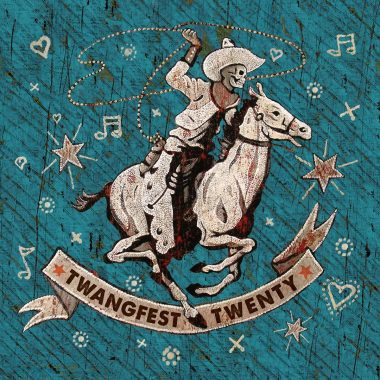
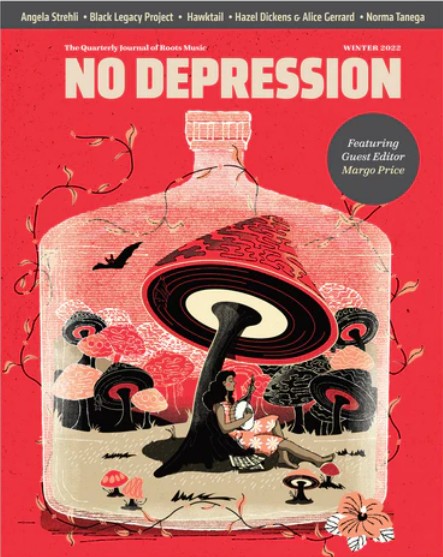
Alternative country is a musical term that emerged in the 1990s. The band Uncle Tupelo is often credited as the originating alt-country band. They released their album No Depression in 1990 with the independent label Rockville. The release launched forum discussions, namely on the Postcard listserv, about an emerging genre: alt-country. While Uncle Tupelo is often credited with the creation of alt-country, there were plenty of other bands that were making music with country elements, but didn’t fit into the popular country sound, that were releasing music independently prior to 1990. For example, The Jayhawks released their first album in 1986, and Jason and the Scorchers even earlier, in 1983. In 1993, the indie label Bloodshot Records was formed and began signing artists and releasing albums under the category of “insurgent country” – mainly out of the Chicago area. The album No Depression and the forum after it inspired an alt-country publication after the same name in 1995. This publication solidified the use of the term “alt-country,” and began to identify what bands belonged in the category. While this may be the closest that alt. country gets to becoming an actual genre, the writers of No Depression resist definition with their subheading: Alternative Country (Whatever That Is?) Bi-Monthly. Later in 1997, the first Twangfest, born from the Postcard 2 listserv, was held in St. Louis. Twangfest showcased favorite acts from the forum.
Is Alternative a Genre?
“Alternative” was first a modifier term that could be added to an already existing musical genre to describe music that didn't quite fit in the mainstream sound of the genre. It seems that the term was first seen in music spaces in or shortly before 1990. At the time, alternative was mostly a modifier for two genres, country and rock, but it is now used with pop, and even as a standalone term. When "alternative rock" gained underground popularity rapidly in the 1990s, major labels, TV, and radio noticed and began using the term as well. Major labels did what they do best: identified a sound that could be replicated, and applied the term alt-rock to that sound. This is when the term evolved into a genre. This genre lasted from 1990 to sometime in the 2000s and included a few subgenres such as grunge, Britpop, and experimental. Now, alt-rock is an umbrella term and can include music ranging from Sublime to Pierce the Veil to Tame Impala. It no longer means that the music is outside the mainstream, because it has been adapted into the mainstream. The term is similar to “indie music,” which emerged as a term to define music that was produced independently, without major labels, but is now used as a genre to market to an audience looking for a specific sound.
Brief Alternative Rock Origins
Alternative rock began in a similar manner to alternative country. It was a term that began in the late 1980s and beginning of the 90s, embodied music that had rock roots and influence, but didn’t fit into the mainstream, marketable sound of rock music. The defining elements are just as vague and inconsistent as they are with alternative country. There are similarities in instrumentation across the term (electric guitar, drums, bass, vocals), but no similarities in production, as many of these bands recorded and released music on their own. Alt-rock grew rapidly throughout the 90s. Bands that started in garages and were playing in tiny, sweaty bars were quickly picked up by major labels, and the term evolved into a genre that was pushed into mainstream markets. Most bands got signed for an album or two and then were dropped when they didn’t seem to gain traction in the market. The biggest exception was Nirvana. Nirvana signed with DGC Records in 1990, and Nirvana’s album Nevermind became No. 1 on Billboard in January 1992. They were the most popular alternative rock band. But how can a mainstream band topping national and international charts be considered “alternative?”
How Do Listeners Interact with the Term "Alternative?"
Alternative Rock and Genre
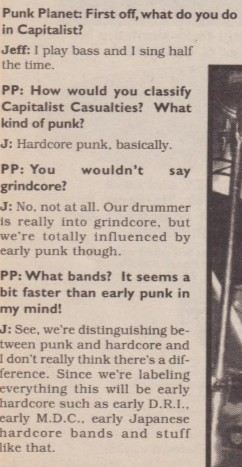
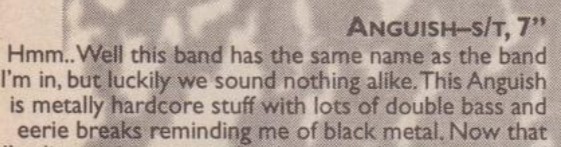
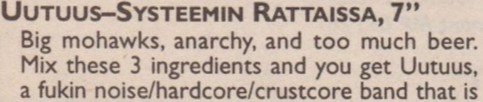
It isn’t hard to see that with modern internet and streaming, subgenres are increasingly being applied to music. These subgenres have been present since before the 90s (country has Hillbilly, Rockabilly, Nashville Sound, etc.) Rock is maybe one of the most prominent “umbrella” genres that includes one of the widest varieties of subgenres. Subgenres are often, but not always, applied to bands in retrospect. There is some separation between when these bands were developing and making their first albums and when fans create a new label to apply to them (for example, Iggy Pop and the Stooges may now be considered proto-punk, but during their early years, punk wasn't quite a genre yet.) While terms themselves are not often debated (that both the terms grunge and post-grunge exist is generally accepted), what bands they apply to and what they sound like are some of the most common and least agreed-upon discussions I have seen in subreddits regarding music. It is harder to tell when this hyper-categorization started, so I began looking through two prominent magazines in the alt-rock scenes of the 90s, SPIN Magazine and Punk Planet, to find mentions of the same subgenres we use today. Looking through a 1995 issue of Punk Planet I saw mentions of hardcore, college-rock, grunge, emo, grindcore, pop punk, and punk. I was surprised to see this amount of genre discussion already present, and it seems like many musicians at the time felt the same. In the same issue, an interview with the bassist/vocalist of the band Capitalist Casualties, displays this discomfort and confusion with the labels (right).
Below are excerpts from some of the album reviews that mention subgenres in this issue.




Alternative Country Audience
Alternative country fans, especially during the 1990s, embraced the term “alt-country” to describe some of their favorite bands, but not without sarcasm. From the preface to the 1998 publication by the writers of No Depression magazine, “An Introduction to Alternative Country Music, Whatever That is,” Alden and Blackstock write: “Alternative country, whatever that is. No matter how hard we’ve tinkered with the slogan that appears below the logo on the cover of No Depression magazine, the gentle sarcasm with which the phrase 'alternative country' was first chosen seems rarely to have translated.” This attitude towards the term permeated the entire audience. A later publication, titled “The Best of No Depression: Writing About American Music” also includes a preface by Alden and Blackstock with a bit more background and thought given about the slogan.
For most of the ten years we have published No Depression, each issue has appeared with a subtitle that constantly changed but usually promises a bimonthly alt-country magazine (whatever that is). For most of those ten years, too much attention has been paid to the alt-country half of that phrase, and too little to its parenthetical companion.
Continuing in the preface, Alden and Blackstock also write about their experience with the mainstream music industry:
Over the intervening years, alt-country came to mean several things. To the mainstream music industry (O Brother notwithstanding), it became code for “doesn’t sell”; to fans, it came to describe a network of hardworking bands that fused punk rock’s DIY spirit to country music’s working class honesty. Most of those initial groups, indeed, didn’t sell all that many records and sought greener pastures of one kind or another, or settled into day jobs.
They also explain their own backgrounds, goals, and purposes when it comes to No Depression:
We are not biologists. It is not our purpose to identify, quantify, and codify a subgenus called alt-country, or to limit ourselves to its study. We are writers, minor-league historians, fans; musicians bridle at being categorized, as do we. It is our purpose to write and assign articles about artists whose work is of enduring merit. And, yes, those artists have some tangential relationship (at least to our ears) to whatever country music may have been – even to what it may now be. Or, rather, to the music of our country, these United States.
Since No Depression magazine played a major role in shaping the alt-country landscape, these comments hold lots of weight when it comes to the values of alt-country listeners. Alt-country enthusiasts had little desire to define the boundaries of alt-country and create new labels. While there were some subgenre tags that emerged (most notably, cowpunk), none really stuck with the fans or forums. Fans tended to understand that alt-country was meant to be a reaction against the mainstream, and that it should stay that way. It isn’t that alt-country didn’t really mean anything; it just wasn’t a label that could limit musicians, or one that could be used by a distributing label or radio to generalize and commodify the music.
Conclusion: Alt-Country Survives Underground
Genres are not inherently harmful. They can help us communicate information about sound, production – even lyrical content – in one word. Fans use genres to discuss music with other fans, to recommend new music to others, and to find it themselves. Before listening to music, it isn't uncommon to want to know what you're getting into. If you already listen to one band tagged folk punk, there’s a good chance you may like other bands under that tag. However, when it comes to alternative/underground music (as in, not mainstream), I think this categorization detracts from the scenes and may lead them to become co-opted by mainstream music industries. Using a label like alt-country does convey certain aspects: non-mainstream, DIY ideals, American roots music influence. No other information is needed for the fans; they appreciate the values the music is based in, even if bands sound drastically different from each other. They may discuss that one band has more punk influence and another has more blues or R&B influence, but rarely is there a need to delineate each artist into a neat category. I believe this is the only way music can survive underground. While there are certainly other factors that led to markets being disinterested in alt-country (it was too folksy for rock fans and too punk for country fans), I do think categorization and subgenres play a large part. When a music scene begins to define and categorize music, it turns into a product that can be replicated and can be sold back to the individuals who liked it in the first place. For example, alternative rock began getting popular and Nirvana got picked up by a major label. The label fine-tuned Nirvana's sound enough that they could sell and replicate it. When they had major success, labels found other bands they could subject to the same process. Major labels could have tried to sell alt-country back to fans, but the fans wouldn’t have bought into it, since it went against the core of the movement and the music. When you have a scene that not only resists definition and firm boundaries, but also in some way satirizes the term that they are proclaimed fans of, you create something that is essentially uncommodifiable.
Further Research
Since the 2010s, alt-country as a term has fizzled out significantly under the shadow of a different term: Americana. While this term is equally as vague as alt-country, it has been plucked by major markets. The Grammys created the Award for Best Americana Album in 2010, and you can find the term applied to numerous bands and solo artists with a wide variety of sounds on streaming services. I think further research around this topic could be into how music in the modern streaming landscape could stay underground, if at all possible, or if the definition of underground and mainstream would have to change completely.
Sources
- Action, Eric, et al. “Record Reviews.” Punk Planet, Apr. 1995, p. 73-83.
- Alden, Grant, and Peter Blackstock. “Preface.” No Depression: An Introduction to Alternative Country Music (Whatever That Is), Dowling Press, Nashville, TN, 1998.
- Alden, Grant, and Peter Blackstock. “Preface.” The Best of No Depression: Writing About American Music, University of Texas Press, Austin, TX, 2005.
- Brennecke, Lauren. “Twangfest Ends St. Louis Summer Event Due to Growing Costs to Focus on Smaller Shows.” St Louis Public Radio, 11 Apr. 2024, www.stlpr.org/arts/2024-04-11/twangfest-ends-st-louis-summer-event-due-to-growing-costs-to-focus-on-smaller-shows.
- Bauder, A. “Keeping It Real? Authenticity, Commercialisation and Family in Australian Country Music”. M/C Journal, vol. 18, no. 1, Jan. 2015, doi:10.5204/mcj.939.
- Dandy, Will. “Interviews.” Punk Planet, Apr. 1995, p. 32.
- Durchholz, Daniel. “Twangfest Adapts to Stay Alive.” St Louis Public Radio, 20 July 2017, www.stlpr.org/arts/2008-06-03/twangfest-adapts-to-stay-alive.
- Ellis, Iain. "Cowpunk: A Brief Y'alternative History." PopMatters, 15 Feb., 2021. ProQuest, https://www.proquest.com/magazines/cowpunk-brief-yalternative-history/docview/2492258009/se-2.
- Fetterley, Leanne Marie. “Give Me Real, Don’t Give Me Fake”: Authenticity, Value, and Popular Music. 2007. ProQuest Dissertations & Theses.
- Fields, LaShawnda N. “The Freedom to Explore across Music Genres.” Medium, 29 Jan. 2025, medium.com/spark/the-freedom-to-explore-across-music-genres-eae43c50ce05.
- Fleischli, Lana. “Punk Is Not Just a Genre.” Desperately Seeking Serious, Desperately Seeking Serious, 26 June 2025, www.desperatelyseekingserious.com/music/punk-is-not-just-a-genre.
- Hill, Jeremy. “‘Country Comes to Town’: Country Music’s Construction of a New Urban Identity in the 1960s.” Popular Music and Society, vol. 34, no. 3, 2011, pp. 293–308, https://doi.org/10.1080/03007761003726233.
- Infobase, film distributor, and Shaun Katz PTY LTD. Underground Inc, The Rise & Fall of Alternative Rock. Shaun Katz PTY LTD., 2021, https://go.openathens.net/redirector/jmu.edu?url=https%3A%2F%2Ffod.infobase.com%2FPortalPlaylists.aspx%3FwID%3D96579%26xtid%3D273456.
- Jackson, Mark Allan, editor. The Honky Tonk on the Left: Progressive Thought in Country Music. University of Massachusetts Press, 2018. JSTOR, https://doi.org/10.2307/j.ctv3t5qf4. Accessed 7 Dec. 2025.
- Malone, Evan. “Country Music and the Problem of Authenticity.” The British Journal of Aesthetics, vol. 63, no. 1, 2023, pp. 75–90, https://doi.org/10.1093/aesthj/ayac020.
- McKenry, Timothy. “Beyoncé Is Right – Music Genres Can Force Artists into Conformity. but Ditching Them Isn’t an Option.” The Conversation, 21 Nov. 2025, theconversation.com/beyonce-is-right-music-genres-can-force-artists-into-conformity-but-ditching-them-isnt-an-option-249016.
- Mclaughlan, Scott. “Did the Ramones Invent Punk?” The Collector, 18 Dec. 2023, www.thecollector.com/did-the-ramones-invent-punk/.
- Moayeri, Lily. "Rock ‘n Roll, Cowpunk, Outlaw: We’re ‘In Good Company’ With Charlie Overbey." Spin (Online), 05 Aug., 2024. ProQuest, https://www.proquest.com/magazines/rock-n-roll-cowpunk-outlaw-we-re-good-company/docview/3147095544/se-2.
- Peterson, Richard A., and Bruce A. Beal. “Alternative Country: Origins, Music, World-View, Fans, and Taste in Genre Formation.” Popular Music and Society, vol. 25, no. 1–2, 2001, pp. 233–49, https://doi.org/10.1080/03007760108591795.
- Ruch Young, Jennifer E. Too Country for Rock & Too Rock for Country: Cowpunk as Regional Identity, Muted Memory, and the Aesthetic Ethos of Alternative Performance, Middle Tennessee State University, United States -- Tennessee, 2022. ProQuest, https://www.proquest.com/dissertations-theses/too-country-rock-amp-cowpunk-as-regional-identity/docview/2699697779/se-2.
- Russell, Robert Austin. Looking for a Way out: The Politics and Places of Alternative Country Music. 2009. ProQuest Dissertations & Theses.